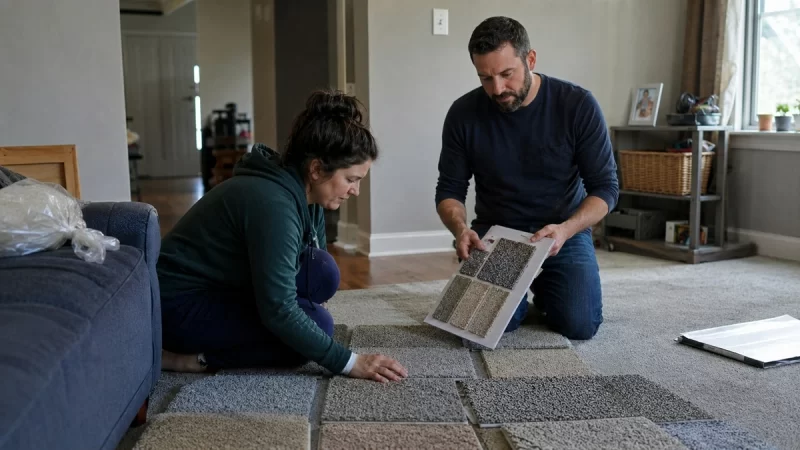
 How to buy carpet for your home can feel simple at first. Most people think it’s just picking a design and moving on. You walk into a showroom, run your hand over a few samples, and everything suddenly feels soft, thick, and probably fine. Then the questions show up. Will it survive kids? Pets? That one hallway everyone somehow drags mud through? That’s usually where things start to get unclear.
The problem isn’t a lack of options. It’s having too many of them. Fibers, piles, loops, blends, treatments. It all sounds technical until you realize each choice changes how the carpet looks and holds up a year or two later, not just on day one.
This guide breaks it down in a practical way so you can match carpet type to real use. Not showroom lighting.

Carpet Fibers: What You’re Actually Walking On
Carpet fiber is the foundation. It determines how the carpet feels, how it wears, and how much work it takes to keep clean. Most carpets fall into two groups: synthetic and natural.
Synthetic fibers dominate the market because they’re cheaper and more practical for everyday homes. Natural fibers are more premium but come with limitations most people don’t expect.
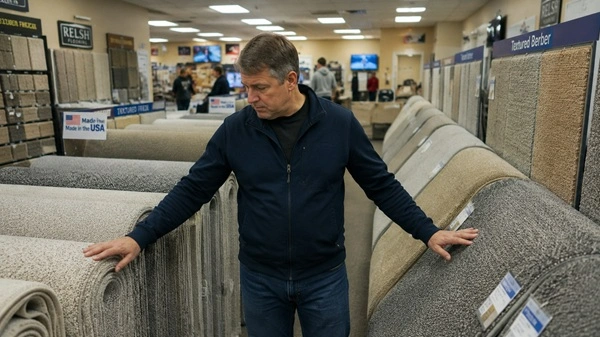
Synthetic Carpet Fibers (Most Homes End Up Here)
Synthetic carpets are engineered for durability, stain resistance, and cost efficiency. They’re the default choice in modern homes because they handle real-life mess better than natural fibers.
Acrylic: The Wool Look Without the Wool Price
Acrylic carpet is often used as a wool alternative because it mimics the look without the same cost or maintenance.
It stands out for:
- Strong resistance to soil and stains
- Good performance in busy households
- Decent color stability in many environments
It’s often chosen in commercial spaces or family homes where spills are normal. Think living rooms with kids constantly moving between snacks, toys, and outdoor play.
Where it struggles is availability and long-term durability compared to nylon. It’s not as common in mainstream residential installations, but it still holds a niche.
Nylon: The Workhorse of Modern Carpets
Nylon is one of the most widely used carpet fibers globally. There’s a reason for that. It handles pressure well.
Key strengths include:
- High durability under heavy foot traffic
- Good stain resistance when treated
- Easy to clean compared to many fibers
- Naturally resistant to mildew
- Suitable for allergy-sensitive homes
It also takes dye well, which means you’ll find it in deep colors and detailed patterns.
The downside is fading. Direct sunlight can dull nylon over time, especially in rooms with large windows. If a room gets strong daylight for most of the day, that becomes a real consideration.
A useful reference on nylon carpet performance and care is provided by the Carpet and Rug Institute.
Triexta: The Newer Stain Fighter
Triexta is relatively new compared to nylon and polyester, but it’s gaining traction fast.
Why people choose it:
- Strong built-in stain resistance
- Good resilience under daily use
- Popular in homes with pets and children
It’s often marketed for busy households, especially where spills are part of normal life rather than rare accidents. Coffee, juice, pet messes. It’s built with those scenarios in mind.
It’s not indestructible, but it holds up better than many mid-range fibers in real-world conditions.
Olefin (Polypropylene): Moisture-Resistant but Limited
Olefin started life in outdoor carpets and basement installations. It was designed for moisture-heavy environments.
Strengths:
- Excellent resistance to water and mildew
- Good stain resistance
- Wool-like appearance in some styles
- Performs well in loop constructions
This fiber is still common in basements, covered patios, and budget-friendly installations.
But there’s a catch. It can fade under constant sunlight and tends to flatten in high-traffic areas. That makes it better for low-impact rooms or specific use cases rather than main living zones.
Polyester: Soft, Affordable, and Not Built for Pressure
Polyester is popular for one main reason: it feels good underfoot at a lower price point.
It offers:
- Strong stain resistance
- Wide color and texture options
- Resistance to mildew and moths
- Lower cost compared to nylon and wool
But it doesn’t recover well under pressure. Furniture marks and heavy foot traffic can compress fibers over time.
It works best in bedrooms or guest rooms where foot traffic is limited. Not hallways. Not stairs.
Natural Carpet Fibers: Premium Look, Specific Conditions
Natural fibers bring texture and character, but they’re less forgiving in everyday environments. Wool is the main one worth discussing in residential interiors.
Wool: The Classic Luxury Option
Wool is often considered the most premium carpet fiber available. It has a natural softness and depth that synthetics try to replicate.
Why people still choose it:
- Excellent durability when maintained well
- Rich, natural color depth
- Strong insulation properties
- Luxurious underfoot feel
It’s commonly used in high-end residential interiors and formal rooms.
But wool has strict limitations:
- Absorbs moisture, increasing mold risk in damp areas
- Sensitive to moth damage if untreated
- Can shed naturally over time
- Fades in strong sunlight
- More expensive than synthetic options
Because of moisture sensitivity, wool is generally a poor choice for basements or humid climates.
The U.S. Environmental Protection Agency highlights moisture control as a key factor in indoor mold prevention, which directly impacts natural fibers like wool.
Carpet Styles: Why Texture Changes Everything
Once fiber is sorted, the next decision is construction style. This affects durability, comfort, and even safety.
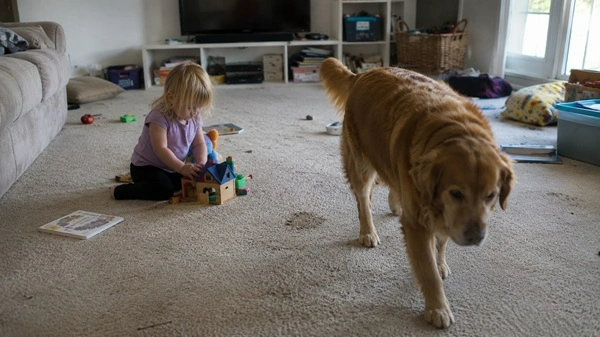
Loop Pile Carpets: Tight and Durable
Loop carpets use uncut yarn loops, creating a dense surface.
Benefits:
- Strong resistance to dirt penetration
- Good durability in high-traffic areas
- Clean, structured appearance
They’re common in commercial spaces and busy households.
Berber Carpet: The Popular Loop Style
Berber is a type of loop pile with varied loop sizes.
Pros:
- Durable in many settings
- Hides dirt fairly well
Cons:
- Loops can snag on pets’ claws
- Not ideal for stairs or mobility aids
- Loose loops wear faster in high-traffic areas
This is one of those styles that looks great in a sample but needs careful placement in real homes.
Cut and Loop: Patterned and Practical (Sometimes)
This style mixes cut fibers and loops to create patterns and texture.
It works well for:
- Hallways
- Family rooms
- Play areas
It hides wear and dirt effectively, which is why it’s often used in busy households.
Downside: loops can still snag, and uneven texture can be tricky for mobility aids.
Texture Pile: The Balanced Option
This is one of the most versatile carpet styles. The yarns are twisted and cut unevenly, creating a durable but soft surface.
Why people like it:
- Strong durability
- Good stain resistance
- Works in most residential rooms
It’s often chosen for living rooms and multi-use spaces where traffic varies.
Frieze: The Curly, High-Traffic Choice
Frieze carpets have tightly twisted fibers that curl slightly.
They’re:
- Very durable
- Good at hiding footprints and wear
- Common in hallways and stairs
However, the curled structure can be tricky for mobility devices and sometimes harder to vacuum deeply.
Plush Carpet: Soft but High Maintenance
Plush carpet feels smooth and formal.
Pros:
- Luxurious appearance
- Soft underfoot
- Ideal for bedrooms and formal spaces
Cons:
- Shows footprints easily
- Vacuum marks are visible
- Not great for messy, high-traffic areas
It’s more about appearance than durability.
Shag Carpet: Style First, Practicality Second
Shag carpet is defined by long, loose fibers.
It offers:
- Strong visual character
- Soft texture
- Retro or modern design appeal
But it traps dirt easily and requires frequent maintenance. It’s not practical for busy households.
How to Choose the Right Carpet for Your Home
This is where most mistakes happen. People choose based on feel, not function.
Start With Room Usage
Ask simple questions:
- Is this a high-traffic area?
- Do kids or pets use it daily?
- Is cleaning a frequent concern?
- Does sunlight hit the floor directly?
Hallways and stairs need durability first. Bedrooms can prioritise comfort.
Don’t Overspend in Low-Use Rooms
A guest bedroom doesn’t need the same carpet as a living room.
Spend more where traffic is constant. Save where it isn’t.
Watch Out for “Fluffy But Weak” Carpets
Some carpets look thick but are structurally weak due to manufacturing techniques like air-fluffed or loosely twisted yarns.
They may:
- Flatten quickly
- Lose shape under furniture
- Wear down faster than expected
They often work only in very low-use rooms.
Carpet Padding Matters More Than People Think
Padding affects comfort and lifespan.
General guidelines:
- Low-traffic rooms: thicker padding for comfort
- High-traffic rooms: firmer, denser padding for support
Typical residential specs often fall around 1/4″ to 7/16″ thickness depending on use.
The Carpet and Rug Institute guides padding density and installation standards:
Cleaning Reality Check
Some fibers are simply easier to maintain:
- Easiest: nylon, polyester
- Moderate: olefin, Triexta
- Hardest: wool
Loop carpets often resist deep staining better, while plush carpets can trap spills quickly.
Quick action matters more than fibre choice. Waiting even a few hours can make stains harder to remove.
Common Mistakes People Make
- Choosing carpet based on showroom feel alone
- Ignoring sunlight exposure
- Using plush carpet in high-traffic zones
- Overlooking pet behaviour (especially claws on loop carpets)
- Skipping proper padding decisions
- Assuming all stain-resistant labels mean “spill-proof”
Final Thoughts
Carpet isn’t just a design choice. It’s a daily-use surface that reacts to everything happening in a home. Foot traffic, spills, pets, sunlight. It all shows up eventually.
The right decision comes from matching fibre and style to actual lifestyle patterns, not just colour or softness in a store.
Once that alignment is right, carpet becomes easy to live with. When it’s wrong, it becomes a constant maintenance problem you didn’t plan for.
Conclusion
Carpet selection always looks like a design decision on the surface, but it behaves more like a long-term lifestyle choice once it’s installed. Fiber type, pile structure, and padding all work together in ways that only become obvious after daily use starts.
The most reliable approach is to think in terms of pressure points. Where does the most movement happen? Where do spills happen? Where does sunlight hit hardest? Once those patterns are clear, the choice becomes less about trends and more about function that holds up over time.
“Match the toughest rooms first, then build comfort around them. That order alone prevents most regret later.”